

Ukraine Volya Foundation - 2026 Program Recap
A 15-day trauma-informed camp in the Ukrainian Carpathians for children whose lives have been upended by war - built on safety first, then everything else. This is what the summer of 2026 looked like, what it changed, and what comes next.
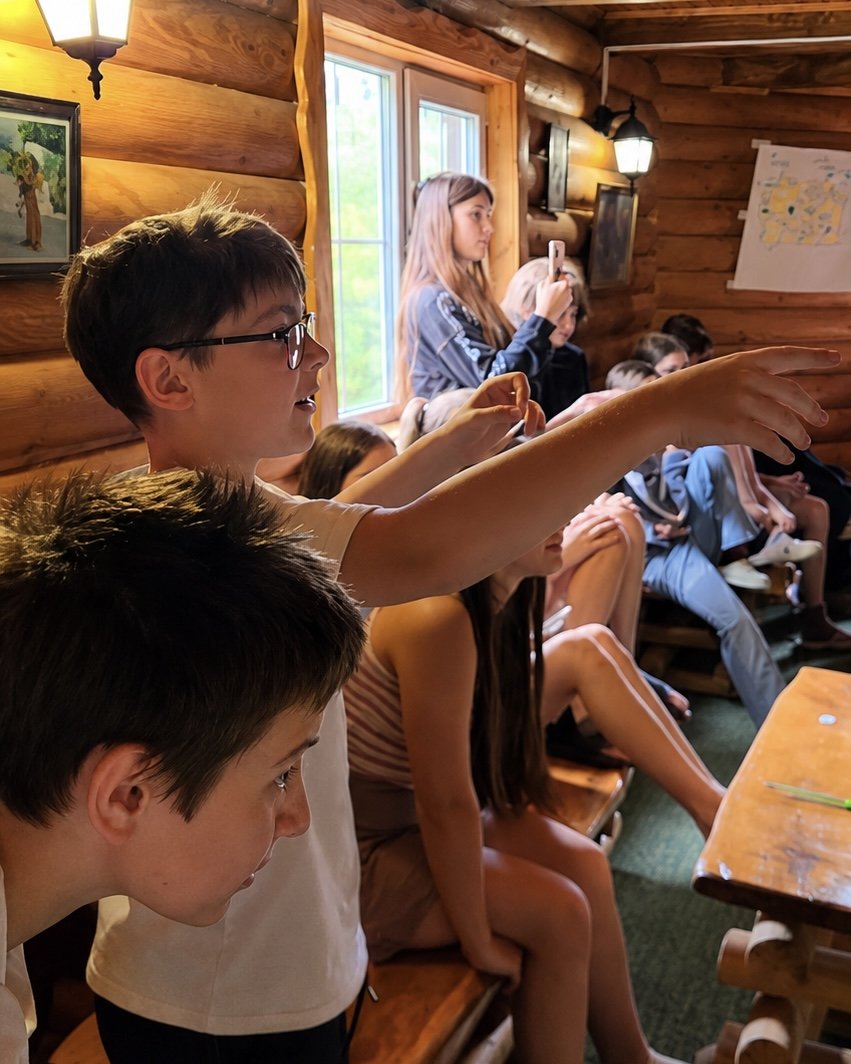
July 12 - 26, 2026 · Vyshkiv, Ivano-Frankivsk Oblast · 47 children, ages 10-16 · 32 trainings & activities

What We Did
Fifteen days, built in a deliberate order
UVF partnered with regional administrations in Kherson and Kharkiv oblasts to bring 47 children - most from frontline communities, several from the same families - to a quiet village in the Carpathians, far from air raid sirens. Forty children were committed; 47 showed up. The program paired 20 psychological trainings with 12 group activities, redesigned this year around one core change from 2025: safety and trust had to come before any work on identity or values, not after.
Day 1 - Safe space & the rules of our pack. Introductions and group agreements - establishing that this place runs on trust before anything else is asked of the children.
Day 2 - Emotional intelligence. Mapping feelings and learning to read them in others - the vocabulary the rest of the camp is built on.
Day 3 - Self-regulation. Taming stress and strong emotion; building a personal "resilience kit" of coping tools.
Day 4 - Who am I? Character, interests, and turning perceived weaknesses into strengths.
Day 5 - Values & courage. What each child actually stands for, and what they can lean on when things are hard.
Day 7 - How relationships work. Listening well, and the difference between a boundary and a wall.
Day 8 - Conflict, without it becoming a fight. Naming disagreement honestly and working toward outcomes both sides can live with.
Day 9 - Team, not just group. Finding a role, and the shift from "me" to "us."
Day 10 - A new kind of leadership. Leading without pressure or hierarchy - creativity over control.
Day 11 - Looking forward. First steps toward a profession and a plan - what to carry home.
Film club: "Big Meanings, Small Frames"
Improv theatre, plus 4 more group activities
Storytelling: "My Story of Strength"
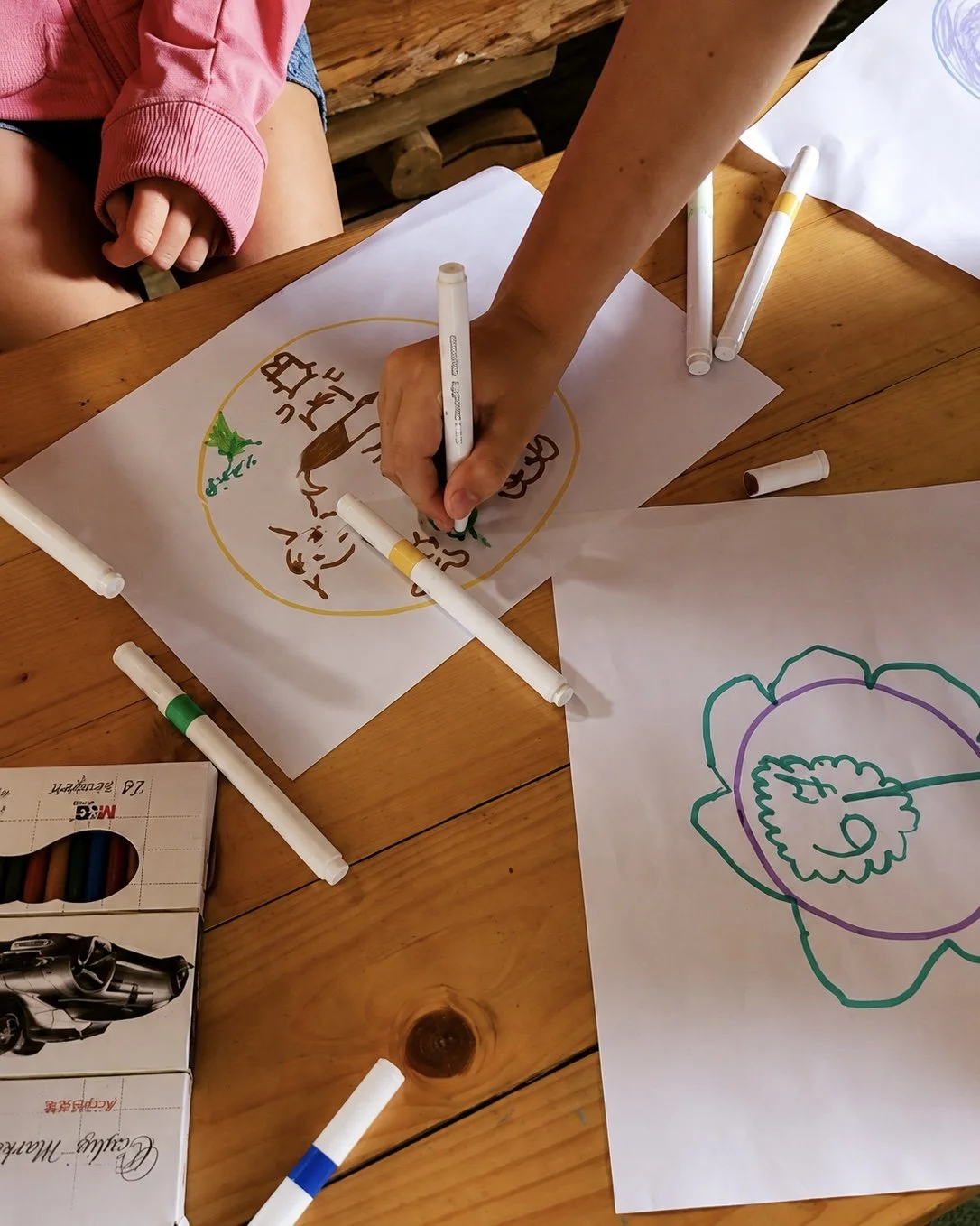
Mural: "Manifesto of Peace and Emotions"
"No Masks" talk show
Photo-quest: "Emotions Through the Lens”
"Trust Maze" ropes course
Engineering project: "Bridge of Resilience"
On site: a lead trainer (Alla Klochko, NGO RESURS), a licensed psychologist and psychotherapist (Ella Kotsai) present the full first week, and a team of volunteer psychology students running individual check-ins and support alongside the group program.
Results & Impact
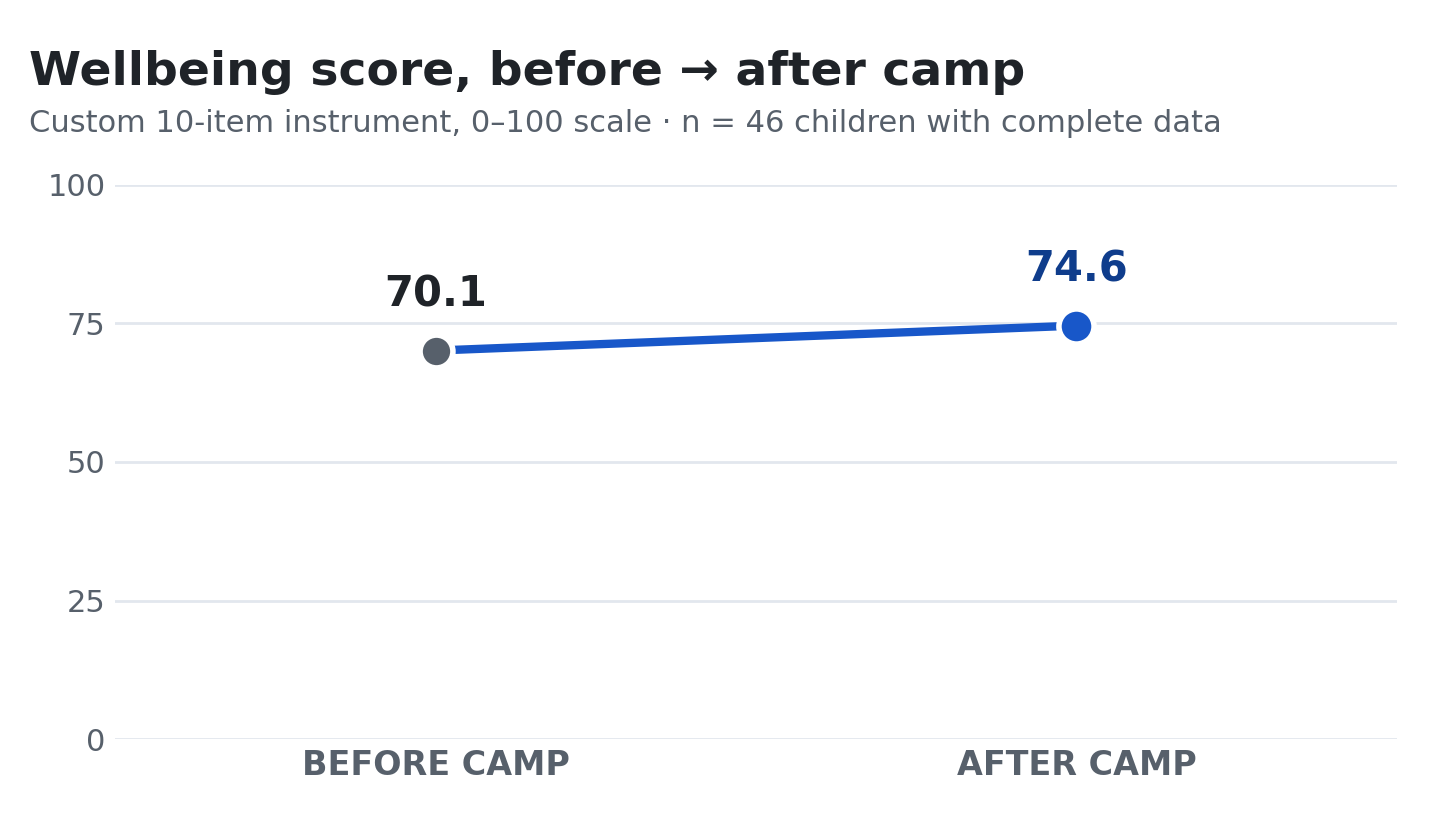
Every child was assessed before and after camp on two instruments: a ten-question wellbeing questionnaire and the DASS-Y clinical scale for depression, anxiety, and stress. Reading both together matters - camp changed how supported and connected children felt more than it changed their underlying clinical symptoms, which is exactly why the story doesn't end when camp does.
47 children attended, vs. ~40 committed; 40 households reached, including 5 sibling groups
−16% drop in DASS-Y depression symptoms; 18 of 47 children referred for continued psychological support
What changed, measured two ways
The strongest gains were in feeling supported, peer connection, and physical/emotional safety. Hope and day-to-day emotional coping dipped slightly - a pattern our psychologist reads as children becoming honest about a hard year for the first time, not as camp making things worse. Anxiety and stress on the clinical scale held broadly steady across the group.
Voices From Camp
At the close of camp, we asked the children what they were carrying home. Their families have given consent for first names and words to be shared publicly; hometowns, ages, and other identifying details are withheld to protect their safety and privacy.
In their own words

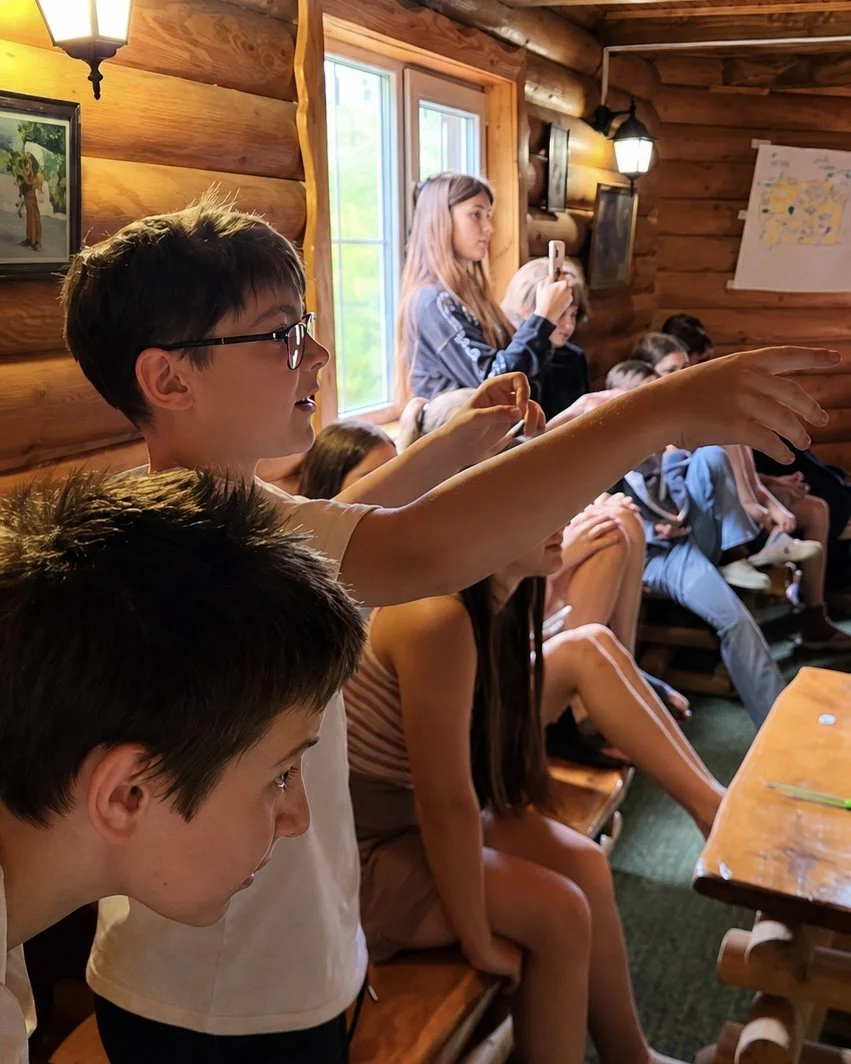
"This camp changed me - I've begun to value myself more, and everything around me, and to think more wisely. A place like this matters so much right now, because these days there is so little that feels joyful or calm."
— Sofia, Camp Participant
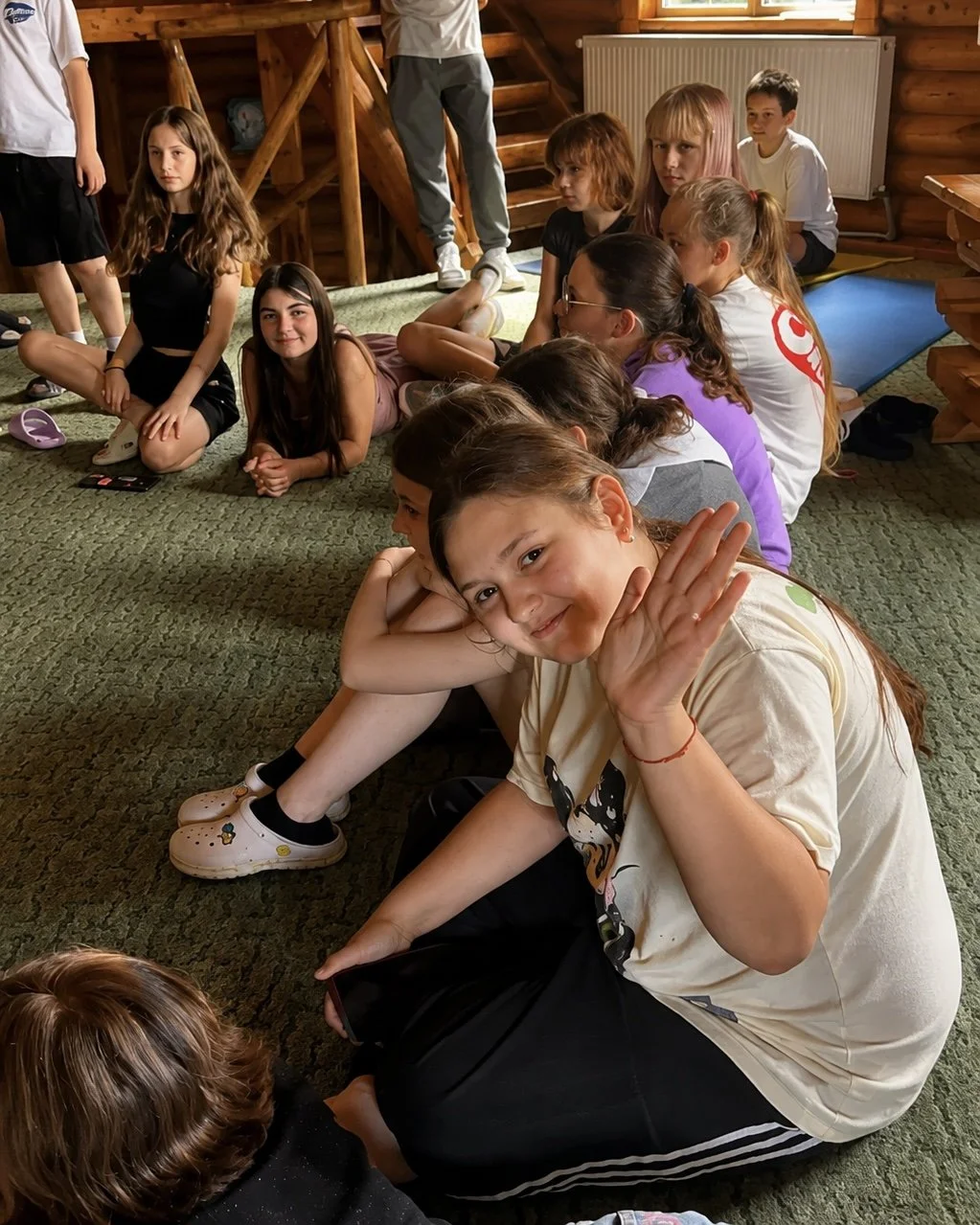
"At first it was difficult to find common ground with my team, but soon it became easy. I felt laughter, joy, and calm. There are people here you can open up to - people who truly listen and understand."
— Eleonora, Camp Participant
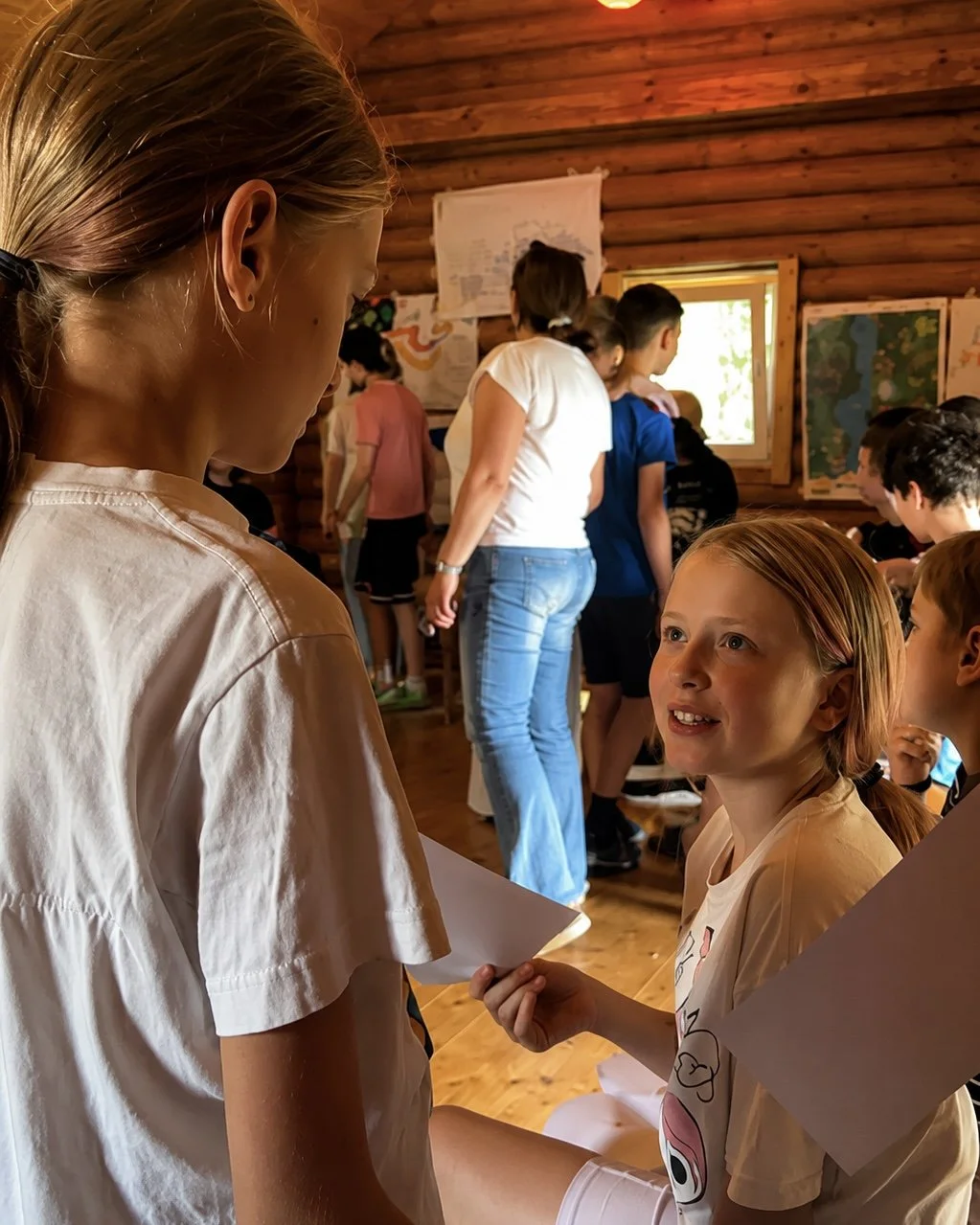
"Here we discover who we really are and who we want to become. We learn to manage our emotions, gain real self-regulation skills, and learn to work as a team and listen to one another."
— Anna, Camp Participant
"This camp taught me to be independent, to work as a team, and not to be afraid to show who I am. Saying goodbye made me so sad - I know for certain I want to come back next year."
— Irina, Camp Participant
"This camp gave me the chance - at least for a little while - to rest from the air-raid sirens, the explosions, and the war, to feel calm and safe, and to simply enjoy being a child again."
- Artem, Camp Participant
What the clinical & volunteer team saw
"At the start of the session, most children were emotionally closed off. By the end of the first week, children began to open up. Some allowed themselves to be vulnerable for the first time in a long while - speaking about their pain and their fears. Many cried when it was time to go home. Those tears were evidence they'd found something meaningful - perhaps a place where they were accepted as they are."
— Ella Kotsai, Licensed Psychologist & Psychotherapist, on-site clinical lead
"By the end of the camp, the children became more open, calmer, and more confident. There were more smiles, and a noticeable growth in trust toward adults. Many of the children did not want to leave the camp, which spoke clearly about how meaningful the experience was for them."
— Olena Pasichnuk, Volunteer, Psychology Student, I. Franko Institute, Lviv
Small actions, Real Impact
What's Next
Camp stabilizes. The next 12 months build on it.
Both instruments point to the same conclusion: camp measurably restored how safe and connected children felt, but it didn't reach the deeper, future-facing distress that two weeks in the mountains can't fully undo. That's the gap the Post-Summer Camp Psychological Support Program is built to close - a 12-month continuation of care for this year's children, delivered virtually so it can reach them wherever the war has scattered them.
Phase I · Days 1–60, Stabilization & re-entry. Weekly group sessions, individual check-ins, and caregiver calls begin one week after camp ends - before the connection fades.
Phase II · Months 3–6, Structured engagement. Weekly small-group sessions for all children; weekly individual therapy for the highest-need cases.
Phase III · Months 7–9, Sustained support. Sessions shift to biweekly as independence grows; monthly caregiver check-ins keep families informed.
Phase IV · Months 10–12, Transition & review. A structured review for every child, referrals into local care where needed, and a full cohort outcome report.
$1,300 - 1,600 per child, per year of care - about $4 a day
With Gratitude
This summer would not have been possible without our funders and partners.
Donald and Jahanna Hoffman
Daniel Goldstein
Holy Trinity Ukrainian Catholic Church
And our partners on the ground — the Kherson Regional State (Military) Administration, the State Border Guard Service in Kharkiv Oblast, and Henichesk City Military Administration — who helped us reach the children who needed this camp most.
Thank you for making Level Up 2026 possible.